PUBG BATTLEGROUNDS Ranked Mode Guide: Climbing From Bronze to Ace
How PUBG BATTLEGROUNDS Ranked works: the RP system, the tier ladder, survival vs kills, and the maps and habits that help you climb.
PUBG BATTLEGROUNDS Ranked is where the casual looting stops and the long game starts. The whole mode runs on one idea: living longer beats killing more. That rule reshapes how you drop, how you rotate, and which fights are worth taking. The breakdown below covers how the RP system actually pays out, what each tier really means, why placement usually beats frags, which maps and squad sizes make the grind smoother, and the mistakes that keep solid players stuck in Gold forever.
How the RP Points System Works
RP stands for Rank Points, and it is the single number that decides your tier. Everything you do in a ranked match funnels into this score. The in-match scoreboard is nice, but RP is the number that follows you between games and across the whole season.
Every new season drops your RP back to a fresh baseline (1500 since the Season 36 revamp), and your first 10 matches are placement games. Those placement matches matter a lot more than people expect, because they set the floor you climb from for the next couple months. Treat them like real matches, not warmups.
What actually earns RP
A few things feed into the score after each match, and they are not weighted equally:
- Placement is the big one. Finish first and you gain the most RP the system hands out. A top 5 finish is a solid positive. Die around 40th or lower and you are usually losing points.
- Kills and assists add to the total, but there is a soft cap on how much they help, roughly six to eight kills worth of bonus per match. Past that, extra frags stop padding your score. Assists count the same as kills, by the way, so there is no reason to fight your own squad over a last hit.
- Survival time gives a quiet bonus. The longer you stay alive, the more the system rewards you, on top of the placement you already earned by surviving.
- Damage and knockdowns feed in too, more as a tiebreaker than a main course.
The devs tune the exact formula season to season and do not publish it, so do not memorize a specific number. The shape of it stays the same: placement first, fight impact second, survival threaded through both.
The entry cost and the math nobody explains
There is one more piece that throws new ranked players off. Every match charges an entry cost in RP before you even land. For a while the cost scaled up hard at higher tiers, which made Diamond and Master brutal to maintain. The current setup uses the same entry cost across all ranks, so the math is steadier than it used to be.
What that means in practice: you need to beat a certain placement just to break even. A quick death at the start costs you RP twice, once for the bad placement and once because you already paid to play. A top 10 finish usually clears the entry fee and banks profit. That break-even point is the real target, not a win every game.
Matchmaking and tier protection
The lobby is not built purely on rank. It reads your skill and KDA, so a high-damage player sitting in Gold can end up fighting Diamonds. Beating players rated above you pays a little more, and losing to players below you stings a little more, so the lobby you draw matters.
Tier Protection is the safety net. When you just barely promote into a new tier, a couple of early losses will not immediately bounce you back down. It gives you a short grace period to find your footing at the new level. After that, you are playing for real, and demotions can happen.
Rank Tiers and Their Requirements
The ranked ladder got a big rebuild in the Season 36 update, and the current ladder looks different from what older guides describe. Here is the real order, bottom to top.
The full ladder, bottom to top
Bronze, Silver, Gold, Platinum, Crystal, Diamond, Master, Survivor. That is eight tiers after the revamp. Each one is split into four divisions, IV down to I, with I being the top of that tier before you promote out.
Two of these are new. Crystal sits between Platinum and Diamond, which gives players a halfway step the old ladder was missing. Survivor is the new ceiling, and it replaced the old Top 500 leaderboard. Only a tiny slice of the player base ever reaches Survivor, which is the whole point of it.
One quick note on the title of this guide: "Ace" is the name of a high tier in PUBG Mobile, not the PC/console game covered here. On this version, the top of the climb is Survivor. Same idea, different name, so do not go hunting for an Ace tier that does not exist on PC.
What each tier says about the lobby
The tiers roughly map to skill bands, and knowing the band helps you read the lobby you dropped into.
- Bronze and Silver are loose. People drop hot, die early, and the circles are chaos. You can climb out of here on survival alone.
- Gold is where the average player lives. Lobbies get noticeably smarter about rotations and cover.
- Platinum and Crystal are where aim and game sense start mattering equally. Sloppy pushes get punished harder.
- Diamond is solid, coordinated players who know the maps and rarely throw for free.
- Master and Survivor are the top end, where positioning, timing, and squad callouts decide almost everything.
The exact RP thresholds for each tier shift between seasons because the devs retune them, so do not chase a specific number you read on an old forum. Focus on the band you are in and the climb to the next band.
Getting in the door
Ranked is not open from a fresh account. You need a couple of things first.
You need Battlegrounds Plus, which is free for anyone who owned the game before it went free to play and a small purchase otherwise. You also need Survival Mastery at level 80, which is just the onboarding track that teaches the basics. Then you play your 10 placement matches, and your starting tier locks in from there.
To queue as a squad, everyone needs to be close in rank. If the gap between your highest and lowest teammate is too wide, the game will not let you queue together, which keeps smurfing and boosting in check.
Decay and inactivity
Your rank can decay if you stop playing. After about a week with no ranked matches, the higher tiers start bleeding a few RP per day, and the higher you are, the more you lose. The good news is decay cannot drop you out of your current tier, only down toward its floor, so a Platinum player will not silently fall into Gold from inactivity alone. One match a week keeps the decay off entirely.
Survival Points vs Placement Points Tradeoffs
This is the heart of ranked, and it is the part most players get backwards. Frags feel good. The scoreboard flashes and the kill feed feeds the ego. But ranked does not care about your ego. It cares how long you lived and where you finished.
Why placement pays more than kills
The math is not symmetric. A kill in the first two minutes of a match is worth almost nothing, because the game knows early kills are cheap and risky. A kill in the final circle is worth a lot more, because by then the lobby is thinned out and the fight actually meant something. There is also that soft cap, so piling up eight early kills stops helping once you hit it while it keeps piling up risk.
Placement scales the whole way. Every spot you climb up the final standings adds to your score, and the jump from 20th to 5th is usually a bigger points swing than the jump from 5th to 1st. So the lever you can actually pull, game after game, is your average placement.
The cheap-kill vs expensive-kill rule
Not every kill is worth taking. Split them into two buckets.
Cheap kills are the ones that come with low risk. A third-party cleanup when two squads have already beaten each other up. A long-range knock on a player caught in the open. A cleanup after you already have positioning and your squad is healthy. Take those all day, because they barely risk your placement and they pad the bonus.
Expensive kills are the coin-flip pushes. Charging a compound across open ground for a squad you spotted. Breaking your rotation to chase a knock into a building you do not control. Trading shots in the open when the blue is closing. Those kills cost you more placement than they are worth in points, and one bad push can turn a top 10 into a 35th.
A worked example
Picture two squad games. In the first, you drop into a quiet compound, loot up clean, rotate early, dodge the early fights, and finish 6th with two kills. In the second, you drop hot, win three early fights, rack up eight kills, then get caught rotating late and finish 28th.
Most players assume the second game was better, because eight kills feels like a carry. Ranked disagrees. The 6th-place, two-kill game usually banks more RP than the 28th-place, eight-kill game, because the placement points swamp the capped kill bonus. The high-kill game also cost you the entry fee twice over.
That gap, played out over a hundred games, is the difference between climbing steadily and treading water.
When fighting is actually correct
None of this means you should hide in a bathroom until the final circle. Avoiding every fight has its own problems. You end up under-looted for the endgame, you give up zone control, and you get pushed by squads that have been fighting and gearing the whole match.
Fighting is correct when it secures positioning, removes a squad contesting your zone, or comes after a third-party opening where the other team is already weak. The test is simple: does this fight make your final placement more likely to go up, or more likely to tank? If you cannot answer that cleanly, default to surviving and rotating.
Best Modes and Maps for Ranked Grinding
Where and how you queue shapes the grind almost as much as how you play. The ranked pool is smaller than the normal-match pool on purpose, so learning it well pays off.
Squad vs Duo
Ranked runs squad and duo, and both feed into the same unified RP pool since the revamp, so your FPP and TPP games no longer split your progress. Squad is the more forgiving format. Four players means shared loot, trade potential, revives, and a shotcaller steering the rotation. A bad fight in squads usually costs one teammate, not the whole run. For most people grinding up, squad is the smoother path.
Duo ranked went global in Season 36, and it plays faster and riskier. Two deaths end the match, the maps feel emptier early, and individual mistakes get punished harder. Duo is great for sharpening your decision-making, but it is less stable for a long climb if you are still learning rotations. Solo ranked is gone from Asian servers and is not the focus elsewhere.
FPP or TPP
Both perspectives count toward your RP now, but they play like different games. First-person (FPP) rewards raw aim, peek discipline, and pre-aiming angles. Third-person (TPP) turns corner-peeking and information gathering into the main skill, since you can watch from behind cover without exposing yourself. Pick the one your region queues fastest and stick with it, because the habits do not fully transfer between the two.
The ranked map pool: Erangel, Miramar, Taego
Ranked map service rotates a little each season, but the core trio has been Erangel, Miramar, and Taego for a while, each showing up roughly a third of the time. Learning these three is the whole game.
Erangel is the classic and the best map to learn ranked on. It is an 8x8 map with a good mix of open fields, compounds, and cities, strong vehicle spawns, and circles that reward clean rotations. Erangel forgives a lot of positioning mistakes because there is usually cover to play if you read the zone early. Most players climb their fastest here.
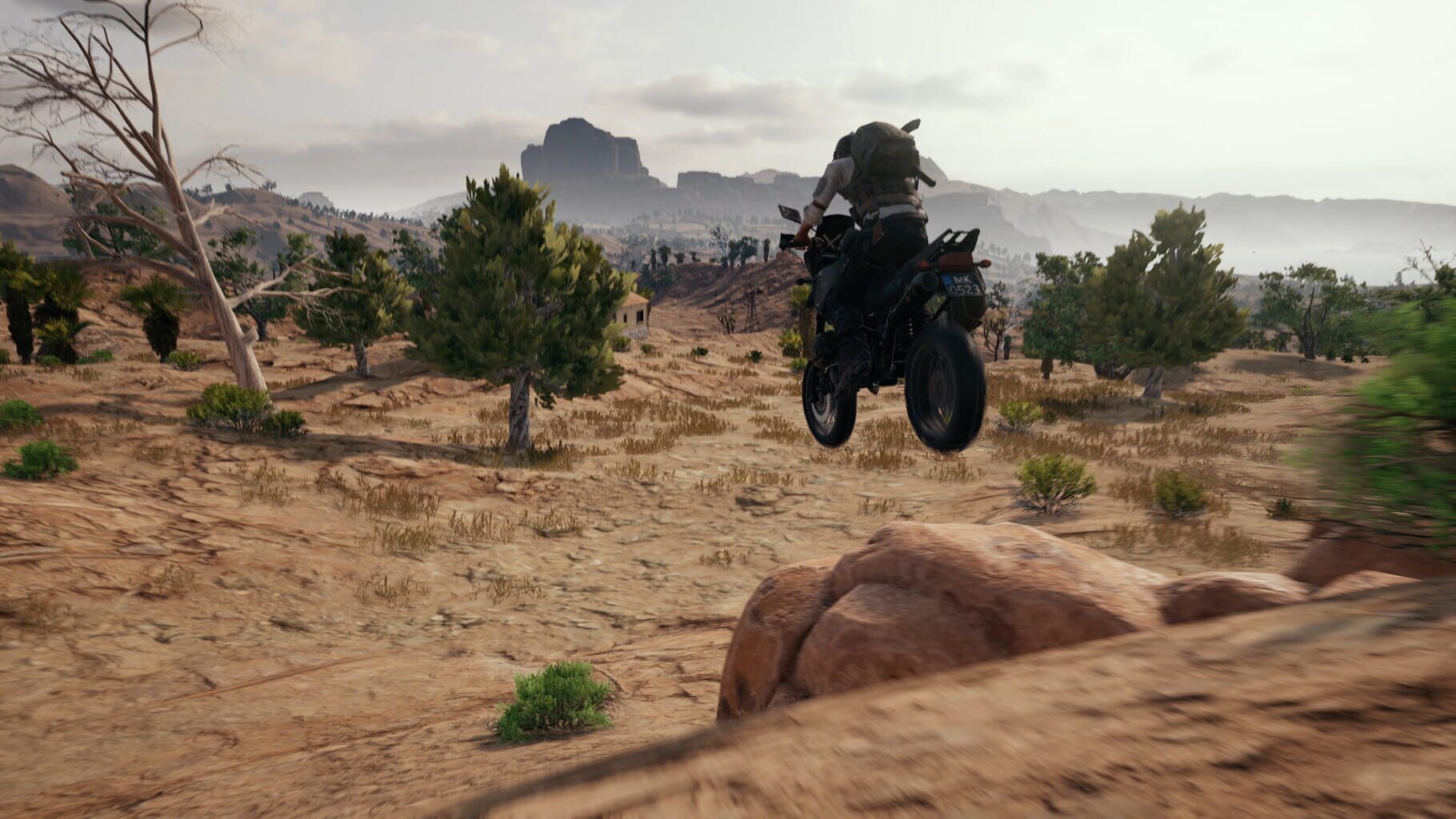
Miramar is huge, dusty, and wide open. Sightlines run forever, and vehicles are mandatory, because running between compounds on foot gets you picked off. Miramar is brutal for players who do not plan their rotations, since one bad cross-country move ends the game. It does reward positioning and long-range fighting more than any other ranked map, so once you understand vehicle paths and ridge lines, it can be a strong map for survival-focused play.
Taego is the newest of the three and the most complex, with destructible terrain and a come-back mechanic that can drop fallen squadmates back into the match early on. Taego has more compounds and tighter fights than Miramar, which makes early survival trickier but rewards squads that know the layout. It is the map most worth poking at in custom matches before grinding it in ranked.
Pick two and go deep
You cannot master all three rotations in a season. Pick the two you queue into most and learn their drop spots, vehicle spawns, bridge timings, and circle-pull patterns cold. The third map you can survive on raw habits. Depth on two maps beats shallow knowledge of all three, and that depth shows up directly in your average placement.
Common Rank-Pushing Mistakes to Avoid
Most players do not get hard-stuck because their aim is bad. They get stuck because they leak RP through the same handful of bad habits every session. Here are the ones that tank the most rating.
Chasing kills over placement
The number-one killer of rank. Players drop hot, fight constantly, post big kill games, and wonder why their RP crawls. It is the placement tax, again. Every coin-flip fight you take that tanks your placement costs more than the kills earned. If you only fix one thing on this list, fix the instinct to fight first and survive second.
Landing hot every single game
Pochinki, School, Pecado, the spots everyone drops. Landing where the lobby lands is the fastest way to die early, and an early death in ranked is the worst-case outcome for your RP. Pick a moderate compound near a vehicle, loot clean, and let the hot-droppers thin each other out. You will place higher on average without doing anything fancy.
Late and lazy rotations
The blue zone in ranked punishes you faster than in normal matches, and teams that rotate late get sandwiched between the circle and the squads already holding the new zone. Rotate early, rotate from cover to cover, and try to stay one circle ahead. If you are fighting the blue, you are usually losing the game even if you survive it, because you arrive at the next zone low on health and out of position.
Pushing across open ground
That squad you spotted in the distance is not worth crossing 200 meters of empty field for. Open-ground pushes are where good players throw ranked games. Either find a vehicle, wait for the zone to force them to move, or let them go. Patience here is free RP.
Queueing through tilt
Ranked is a long-run average, not a single hot streak. Two bad games in a row and a lot of players start forcing fights to "get it back," which turns two bad games into five. The fix is boring but real: after two rough matches, step away for a few minutes, reset, and come back calm. Tilted queueing is probably the single biggest hidden drain on RP over a season.
Tracking kills instead of placement
If your metric for a good session is your KDA, you are measuring the wrong number for ranked. Track your average placement instead. That is the stat that actually correlates with climbing, and watching it move up over a week tells you the approach is working even when a few individual games felt rough.
Greedy looting in the late game
Loot is for the early and mid game. Once you are in the final few circles, extra attachments and a slightly better helmet are not worth the exposure of running through the open to grab them. By the late game you should be holding angles and playing your position, not cruising compounds. Greedy looting turns a top 5 into a top 20 with one bad peek.
No shotcaller in the squad
A squad of four good players with no one calling the rotation usually loses to a squad of three average players with one clear shotcaller. Someone has to own the calls: when to rotate, when to push, when to hold. Pick that person before the match, and everyone commits to the call even if they disagree in the moment. Mid-fight debate is how squads split up and die.