Civilization VI Domination Victory Guide: Best Civs and Army Composition
The civs that win wars early, army builds that crack AI cities, siege math, and how to hold what you take in Civilization VI.
Domination in Civ VI sounds simple. Take every original capital, hold them all at once, done. In practice it's a tempo game. You're racing your own empire's ability to stay functional while you burn production on units instead of districts, and the map's tolerance for your nonsense before three civs declare on you at once. The good news is the AI is pretty bad at war. It builds too few siege units, throws units at walled cities one at a time, and peaces out the second you take a couple of its cities. Beat the mechanics, not the AI, and most of the work is done.
This guide runs on Gathering Storm rules with the April 2021 update, on standard speed. Where the base game differs, there's a note.
Best Civilizations for an Early Rush Strategy
The best war civs all share one thing: a power spike that lands before the AI's defenses do. Which spike you want depends on when you like to fight.
The Ancient Era swarm
| Civ | Spike | Why it wins | |---|---|---| | Sumeria | Turn 0 | War-Carts, no tech needed, no anti-cavalry penalty, ignores zone of control | | Aztec | Turn 0-40 | Eagle Warriors at 28 strength vs. a Warrior's 20, and killed units become Builders | | Scythia | Horseback Riding | Every light cavalry or Saka Horse Archer trained gives you two | | Greece (Gorgo) | Bronze Working | Hoplites with +10 strength when standing next to each other |
Sumeria is the bluntest instrument in the game. War-Carts show up with your first turns, they don't care about spearmen, and they roll over flat ground with bonus movement. The whole plan is find a neighbor, declare, and end them before they finish a second city. The catch is real: Sumeria's kit is all front-loaded. If the rush stalls, you're a civ with no late bonuses playing catch-up.
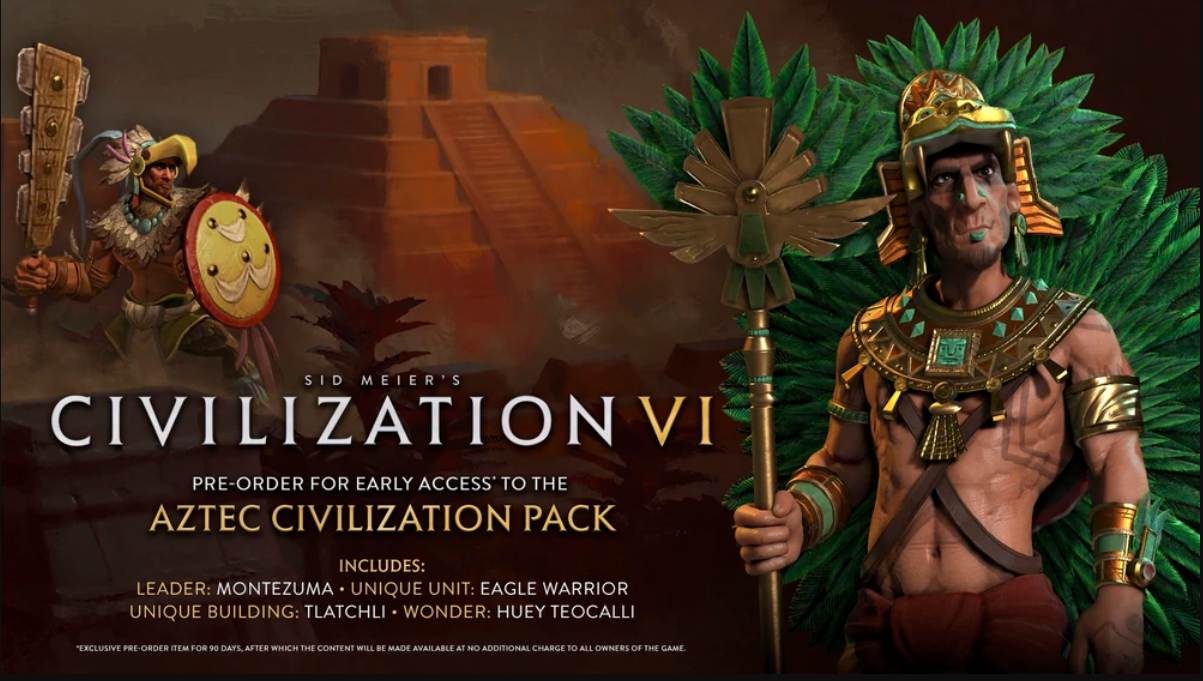
Aztec plays a longer version of the same game. Eagle Warriors hit harder than anything else on the map at that point, cost zero gold to maintain, and every enemy unit they kill turns into a Builder. That last part quietly funds your whole economy. Kill a warrior, get a worker, chop a forest, build another Eagle Warrior. On top of that, every different improved luxury in your territory gives all your units +1 combat strength, and Aztec luxuries make two extra cities happy - which matters a lot later when war weariness kicks in.
Scythia runs on volume. People of the Steppe gives you a second unit every time you train a light cavalry unit or a Saka Horse Archer, so you're paying half price for a horde. Sakas have 4 movement and a ranged attack with range 1, so they swarm and shoot without taking counter damage. Tomyris adds bonus damage to wounded enemies and healing on kills, which keeps the swarm rolling. The weak spot is walls. Horse units can't take a city center alone, so you still need a melee screen and a ram.
Gorgo's Greece is the sneaky one. Hoplites sit at 28 strength and pick up +10 for each adjacent Hoplite, so a phalanx of them is pushing near 40 in the Ancient Era. Anti-cavalry got buffed over the patches and melee got trimmed, so spearmen-type units hold up better than they used to. Gorgo also earns culture from every kill, which means barbarians and early wars literally research your civics for you.
The Classical and Medieval windows
Rome, Macedon, and Hungary don't win at turn 20 - they win around turn 60 to 100, and they win harder.
Trajan's Rome gets a free Monument in every city and roads to new settlements, so your culture and your logistics are handled while you tech to Iron Working. Legions are 40 strength (a plain Swordsman is 36), and each one carries a build charge you can spend on a fort, a road, or a chop. That chop is the fun part: a Legion can harvest woods to rush out the next Legion. Rome's also just a good civ, so if the war goes sideways you can pivot to anything.
Alexander's Macedon is the one civ built to never stop fighting. Macedonian cities generate no war weariness at all, capturing a city with a wonder fully heals every unit you own, and Hellenistic Fusion hands you tech and civic boosts when you take cities with districts. Hypaspists hit 38 strength with a bonus against districts. Basically the game removes every brake the war machine has. The trade is that Macedon has no economy bonuses, so you're living off loot.
Hungary is the bargain-bin army civ, in a good way. Raven King gives levied city-state units +2 movement and +5 strength, lets you upgrade them at a 75% discount, and pays you 2 envoys with the city-state for every levy. Gold buys an instant, modern, boosted army. The Black Army unique unit adds +3 strength per adjacent levied unit, so the mercenary blob feeds itself.
The late monsters
Mongolia, Gran Colombia, and Zulu hit their strides in the Medieval Era and later, and they're arguably the strongest overall picks.
Mongolia's Örtöö doubles the combat bonus from diplomatic visibility - +6 strength per visibility level instead of the usual +3. Send one trade route to a civ, get the trading post instantly, and enjoy what's usually a +12 or better swing on every fight. Genghis adds +3 strength to all cavalry and a chance to capture enemy horse units. It's a civ that snowballs by fighting, which is exactly the assignment.
Gran Colombia gets +1 movement on everything and promoting a unit doesn't end its turn, which is ridiculous when you think about how many turns a normal army wastes on promotions. Bolívar spawns a Comandante General every era - a second Great General-type unit giving +5 strength within 2 tiles that stacks with your real Great General. Two +5 auras on the same stack and everything moving an extra tile means cities fall in half the time.
Zulu is the corps civ. The Ikanda district trains corps and armies 25% faster, unlocks them early through the Mercenaries and Nationalism civics instead of the buildings everyone else needs, and Shaka gives formed corps and armies +5 strength. Impi hordes at corps strength show up while your rivals still have single units on the field. Isibongo even auto-upgrades garrisoned units to corps when you capture a city with them inside, and garrisoned units generate loyalty - which fixes the biggest conquest headache for free.
One pick per playstyle, but the honest answer for pure reliability is Gran Colombia or Zulu if you want to fight all game, and Aztec or Sumeria if you want it over in the first third.
Building an Army Composition That Counters AI Defenses
The AI defends in a specific, predictable way, so build for that and not for some fantasy mirror match.
What the AI actually does
It garrisons a ranged unit in the city, builds walls fairly early on higher difficulties, and counterattacks with whatever's nearby, usually one or two units at a time. It rarely concentrates force. That means the dangerous thing in an AI city is the city itself plus its ranged strike, not the defenders.
So the composition that beats it is boring and it works: a wall-cracking element, a screen to protect it, and cleanup cavalry.
The working ratio
For a typical mid-game push on one city, something like this:
- 2 to 3 melee units - they take the city center and soak the city's ranged shots
- 2 to 3 ranged or siege units - they do the actual damage from outside retaliation range
- 1 support unit - battering ram or siege tower, depending on the wall tier
- 1 to 2 cavalry - they kill reinforcements and pillage
- 1 Great General if you have one
Melee units are your capture button. Only melee and anti-cavalry (and cavalry, with penalties) can walk into a city center to take it, so you always need at least one or two alive at the end of the siege. Ranged units can't capture. Neither can siege. Keep that in mind before you send your last Swordsman on a suicide run.
Ranged units are the workhorses against field units and un-walled cities. Archers into Crossbowmen into Field Cannons shred enemy armies at zero risk to themselves since cities and units only retaliate in melee. The weakness shows up the second walls appear - ranged units do reduced damage to fortifications, which is covered in the next section.
Cavalry is your exploitation arm. Use it to kill things that are running away, to pillage tiles for loot, and to cut off retreats. Light cavalry with the Depredation-type promotions pillage for 1 movement point, and pillaging in Civ VI pays out science, culture, gold, and faith. A war fought mostly by pillaging can fund itself.
Anti-cavalry is mostly skippable against the AI unless you're facing a horse civ. The AI doesn't build the cavalry masses that make spearmen worth their slot.
Stacking the numbers that matter
Combat strength is exponential, not linear. Each point of difference swings damage more than the last, so a +10 advantage isn't "a bit better," it's a rout. Everything you can stack, stack:
- Great General: +5 strength and +1 movement to land units within 2 tiles
- Oligarchy government: +4 strength for melee and anti-cavalry units you build
- Discipline military policy: +5 strength versus barbarians
- Flanking and support bonuses from surrounding a target
- Terrain: hills, rivers, forests - a defender across a river takes a real penalty attacking you
The Encampment district is worth one in your main military city. It generates Great General points, gives experience bonuses with its buildings, and projects zone of control. Your units hitting promotions matters a lot too - a melee unit with a couple of tiers picks up strength and healing perks that carry whole wars.
Corps, armies, and upgrades
Two units of the same type can merge into a corps, three into an army, once you have the civics for it. A corps isn't twice as strong as one unit - it's about 10 strength higher, which is a big multiplier in this system but costs less than double the production. Corps are at their best when you're unit-capped or fighting in tight terrain.
The cheaper path to a modern army is upgrading. A unit built as a Warrior and upgraded through Swordsman, Man-At-Arms, and Musketman keeps all its promotions. Slot the upgrade discount policies (Professional Army for gold, Retinues for resources, both rolled into Force Modernization after the late update) and you're paying pennies on the dollar to turn an experienced ancient army into a modern one. Save gold for the turn after you hit a new military tech. It's the single biggest tempo swing available.
Siege Units and City Capture Mechanics
This is where most domination runs die. Cities in Civ VI are genuinely hard to crack, and the rules are non-obvious.
The wall damage rule
Melee units deal only 15% of their normal damage to walls. Ranged units deal 50%. Only bombard-class units - siege - deal full damage. That single line explains why your army of Swordsmen tickled a walled city for 3 damage a hit.
Walls are a separate health pool sitting in front of the city's health. Until the walls are gone, most of your damage isn't even touching the city. Once walls are damaged enough, attacks start leaking through to city health, but you want the walls down fast regardless.
The two support units that fix this
The Battering Ram (Masonry tech, 65 production) sits next to the city, and while it's adjacent, your melee and anti-cavalry units do full damage to the walls. It only works against Ancient Walls - it does nothing to Medieval or Renaissance Walls, and nothing at all to Urban Defenses.
The Siege Tower (Machinery tech, 100 production) is better: adjacent melee and anti-cavalry units ignore the walls entirely and hit the city's health directly. It works on Ancient and Medieval Walls, fails against Renaissance Walls, and also dies to Urban Defenses.
Practical read: the ram is your Ancient Era tool, the tower is your Classical-to-Medieval tool, and both go obsolete. Build them cheap and expect to leave them behind.
The siege unit ladder
| Unit | Era | Bombard strength | Range | Tech | Resource | |---|---|---|---|---|---| | Catapult | Classical | 35 | 2 | Engineering | none | | Trebuchet | Medieval | 45 | 2 | Military Engineering | none | | Bombard | Renaissance | 55 | 2 | Metal Casting | 20 Niter | | Artillery | Modern | 80 | 2 | Steel | 1 Oil | | Rocket Artillery | Information | highest tier | 3 | Robotics | Oil, moves and shoots |
A few things the table doesn't say. Siege units take a -17 strength penalty against land units, so they're terrible at defending themselves - that's what your screen is for. They can't move and attack on the same turn until they earn the Expert Crew promotion, so plan a turn of setup. And their range of 2 keeps them outside the city's reach but inside the reach of sallying units.
The Observation Balloon is the forgotten gem of the late siege game. It grants +1 range to adjacent bombard-class units, which means your Artillery sits at range 3, out of reach of nearly everything, plinking a city to death untouched. One balloon can support several siege units at once. If your late wars are grinding, this is usually why.
Putting a city under siege
A city center heals every turn unless it's under siege, and it's under siege when all six surrounding tiles are occupied by your units, their zone of control, or impassable terrain. Fully surrounding a city turns off its healing. That's often the difference between a 4-turn siege and a 12-turn one, so spend the extra turn closing the ring.
City strength is tied to the best melee unit that civ has ever built, minus 10, or to the garrison unit if one's present - whichever is higher, plus bonuses for each intact district. That's why a big AI capital with six districts fights like a fortress. Chop the surrounding districts or bring more siege.
The Steel wall
The moment a civ researches Steel, every one of its cities gets Urban Defenses: an automatic 400 HP wall and a ranged attack, no building required. Rams and siege towers stop working cold, and bombards lose a lot of their edge. From that point you need real bombard strength - Artillery and up, ideally with balloons, or bombers. This is the big reason domination runs have a time limit. The window between your power spike and everyone's Steel is when you win. After Steel, wars get long and expensive.
Managing War Weariness and Loyalty in Conquered Cities
Winning the battle and keeping the city are two different games. Both of these systems punish you for exactly the kind of endless war domination requires.
War weariness in plain terms
Every battle you fight generates war weariness points. It's worse when the fighting happens in foreign territory and worse again when your own units die. Every 400 points you've accumulated becomes roughly -1 amenity, spread across your cities. Amenities are per-city happiness, and unhappy cities lose growth and yields. Starve them long enough and partisans spawn inside your own borders.
It scales with era, and declaring war without a Casus Belli makes it worse. So use one. Denounce first, wait the five turns, then declare a Formal War or better. War of Territorial Expansion, Holy War, Liberation War - whatever you can legally justify, it cuts both the diplomatic hit and the weariness.
Weariness decays slowly while you're still at war and much faster at peace. Sometimes the right play is to take two cities, sign peace for 10 turns, let the meter drain, and go again. Peace deals also let you demand the cities be ceded, which matters for loyalty in a second.
Your counters, roughly in order of value:
- Luxury resources. Every improved luxury type you own spreads amenities to four cities. Trade for the ones you lack - the AI overvalues nothing less than duplicate luxuries it can't use.
- Entertainment complexes and water parks in your amenity-hungry core, though they cost real production.
- The Propaganda policy card - 25% less war weariness accumulated. It's a dead slot in a peaceful game and a live one here.
- Alexander. Macedon just doesn't get war weariness. If this mechanic ruins your runs, that's your civ.
Wide empires with smaller cities feel weariness less, since the amenity penalty is capped per city. Tall empires with a few big cities feel it sharply.
Loyalty, the actual city-keeping problem
Every city has a loyalty score from 0 to 100. Below 75, its yields take a 25% hit. Below 25, yields drop 50% and growth 75%. At 0 the city revolts, becomes a Free City, and you have to conquer it all over again.
Loyalty pressure comes from population. Each citizen pushes 1 pressure, capitals push an extra 1, and the pressure reaches 9 tiles out, losing 10% of its force per tile of distance. A newly captured city sits in a sea of enemy population that wants it back, and it usually starts well below neutral. Golden Ages add +0.5 pressure per citizen for you; Dark Ages subtract it. Timing your conquests for a Golden Age is a real strategy, and accidentally conquering during a Dark Age is how empires lose cities they took fair and square.
The occupied-city penalty is -5 loyalty, and a garrisoned unit gives +5, so garrison everything you take. Then layer on:
- A Governor, worth +8 loyalty. Victor with the Garrison Commander title adds +4 to friendly cities within 9 tiles, and a governor can cover a whole cluster, not just one city.
- Limitanei (military card): +2 loyalty in cities with a garrisoned unit.
- Praetorium (diplomatic card): +2 loyalty in cities with an established governor.
- Colonial Offices (economic card): +3 loyalty in cities on a different continent from your capital.
- Your religion in the city: +3. Someone else's: -3.
- A Monument: +1. It's usually already there.
Two structural fixes beat all of the above. First, conquer in a line, not in dots. A city surrounded by your own population holds; an island of yours inside their territory flips. Second, get the city ceded in a peace deal, or wipe out the original owner entirely - both remove the occupation penalty for good.
If a city does go Free City, don't panic. Free Cities can be re-flipped by pressure, and if your pressure is strongest when their loyalty hits 0 again, they ask to rejoin you peacefully.
Snowballing From One Continent to Total Domination
The win condition is the original capital of every civ still alive, held at the same time. Not every city. Not city-states. Original capitals, even if that civ moved its capital after you took the first one.
That distinction shapes everything. You can ignore whole empires if their capital's already in your pocket - leave them alive, at peace, and irrelevant. A civ whose capital you hold but whose cities you skipped is worth more to you breathing than destroyed. And you don't need to hold all of them at once until the end, so losing one to a flip or a reconquest isn't fatal, it's just annoying.
The snowball loop
A domination run that's working looks like a loop: conquer with your current-era army, pillage everything on the way, use the loot to fund research and upgrades, hit the next military tech, upgrade the whole army in one turn, repeat. The pillaging is not optional. A fully looted countryside can pay out thousands of science and culture, which keeps your army from going obsolete while you fight. Wars in Civ VI are often won by the side that upgraded last.
Watch your strategic resources. Niter for Bombards, Oil for Artillery and tanks, Aluminum and Uranium later. Running dry mid-campaign means your reinforcements stop, so check the map before you commit, and trade for what you're missing before the war starts rather than during.
Crossing the water
The mid-game wall is the ocean. Transoceanic conquests need a navy, and the cheap version is usually enough: a few Frigates or Battleships to reduce coastal city health from range, plus a couple of escort ships for the troop convoy. Coastal cities fall fast to naval bombardment since most of your land siege rules still apply and the AI rarely counters with a fleet of its own.
Land on a weakly held flank, take a beachhead city, and immediately start the loyalty game - plant a governor, garrison it, and push inland toward the capital rather than grabbing coastline. Colonial Offices does real work here since everything you take overseas counts as off-continent.
The endgame, and why you shouldn't sit around
Past Steel, wars turn into a production contest. Urban Defenses everywhere, cities at 100+ strength, AI capitals bristling. Artillery with observation balloons, bombers, and tanks or modern armor are the tools. Your experienced core army - the one you've been upgrading since the Ancient Era - is worth more than anything you can build fresh, because four promotions of stacked strength and healing carry over.
The strongest argument against pausing to consolidate is that the world doesn't pause with you. Every turn of peace, the remaining civs tech toward Steel and Urban Defenses, build walls, and form coalitions against the runaway. Grievances pile up either way. Fight while your spike is live, peace out long enough to drain weariness and cede cities, and then pick the next target before the last one's borders are even quiet.
Last practical tip: keep a spreadsheet-level count of the original capitals, or at least check the victory screen every so often. The single most common way a domination run goes long is taking the same civ's second, third, and fourth city while its original capital - the only one that counts - sits three tiles off your convoy route.